
Beyond the Mist is a 1-3 player deckbuilder set on a fog-shrouded island. Players resolve encounters by playing Action Cards from their decks, gain rewards to grow stronger, and push toward Endgame Encounters that decide who wins. The twist is that not all victory conditions benefit everyone, and some players may be working toward secret objectives that put them at odds with the group. I designed the whole game solo over 8 weeks during a course at GameDesignSkills.com with weekly mentorship from Jeremiah Franczyk (Lead Designer on LoTR Online and D&D Online).
Sole Game Designer, mentored by Jeremiah Franczyk.
Encounter resolution gave players too little agency, replayability was low, and a pure co-op design risked quarterbacking and no real tension.
A type/subtype matching matrix, a Land Deck producing 204 encounter combinations, competing Endgame Encounters for deception, a Ghost Player rule, and a cross-session legacy layer.
Paper, then Figma, then Tabletop Simulator prototypes; a full card & board graphic overhaul; D6 multiples-of-3 balancing across 7 versions.
Six blind playtests drove feedback from "I don't understand this" to "just tune the numbers" — a signal the core design read clearly. Shipped as a complete Tabletop Simulator proof of concept.
Responsibilities
- Designed the card type/subtype matching system: 4 Types, 12 Subtypes, and a bonus-dice resolution rule.
- Designed the Land Deck modifier system that produces 204 unique encounter combinations from a small deck.
- Designed the deception layer using competing Endgame Encounters with varying victory conditions.
- Designed the Ghost Player mechanic, keeping dead players socially active in the session.
- Designed a cross-session legacy system including a Secret Manual, returning-player objectives, Knowledge Points, and a True Ending.
- Performed a full graphic overhaul of all cards and boards to solve information overload.
- Wrote the full ruleset, ran 6 blind playtests, and iterated the design across 7 versions.
Design Goals
Three pillars drove the project:
- Risky co-op. Players need each other but can't trust each other. Cooperation is mechanically useful, but never guaranteed to be reciprocated. This came out of the Binding of Isaac card game and Werewolf's hidden roles.
- Deckbuilding as identity. Your deck reflects what you do in the game, and every card you add is a real decision. Slay the Spire is the obvious touchstone.
- Mystery and discovery. A foggy, magical world where the environment itself is uncertain. Fog hides parts of the island, and a legacy layer rewards repeat play with deeper rules.
From there I picked five emotions I wanted the game to produce, and mapped each one to a mechanic:
- Joy of Power, from deckbuilding that grows the player over time.
- Joy of Connection, from card types that encourage cooperation.
- Sense of Panic, from Endgame Encounters that force all-hands-on-deck moments.
- Sense of Paranoia, from the possibility of betrayal making the cooperative moments feel earned.
- Fear of Survival, from danger that scales with time so growing power is always matched by growing threat.
The Card Type System
In solo playtesting I found that player agency was too low. Resolving an encounter usually came down to picking the encounter that matched the type of your action cards. There wasn't enough reason to think strategically about which cards to buy or which encounters to prioritize. The game needed a system that made deckbuilding choices matter, without becoming so complex that players couldn't grasp it inside one session.
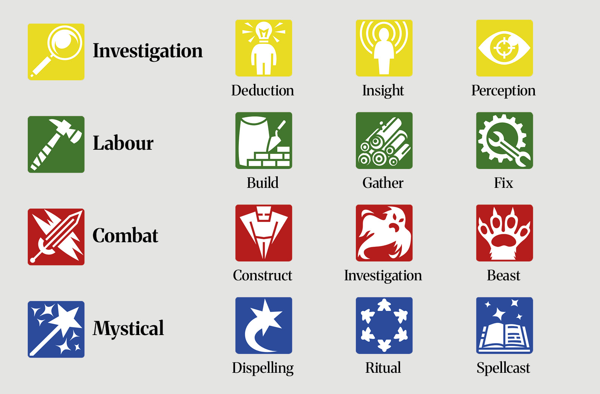
I built a type/subtype matrix that gives every card two classification layers. When an Action card's Type or Subtype matches the Encounter it's used on, the player gets bonus dice rolls, which makes resolution faster and more efficient. That sets up an ongoing strategic question: build a specialized deck (big bonuses against specific encounters) or a diversified one (moderate effectiveness against anything).
Each of the 4 Types carries a gameplay role:
- PvE Focus. The majority type. Handles core combat effectiveness.
- Control. Lets you see other players' cards, learn hidden information, and manipulate the game state.
- Soft PvP. Lets you block other players' action cards, steal resources, or interfere indirectly.
- Support. Heals players, gains resources, and eases the game state for everyone.
The 12 Subtypes add a second layer of matching granularity within each Type. Rare multi-type cards with high values become high-stakes chase items: hard to obtain, but powerful enough to change the direction of a session.
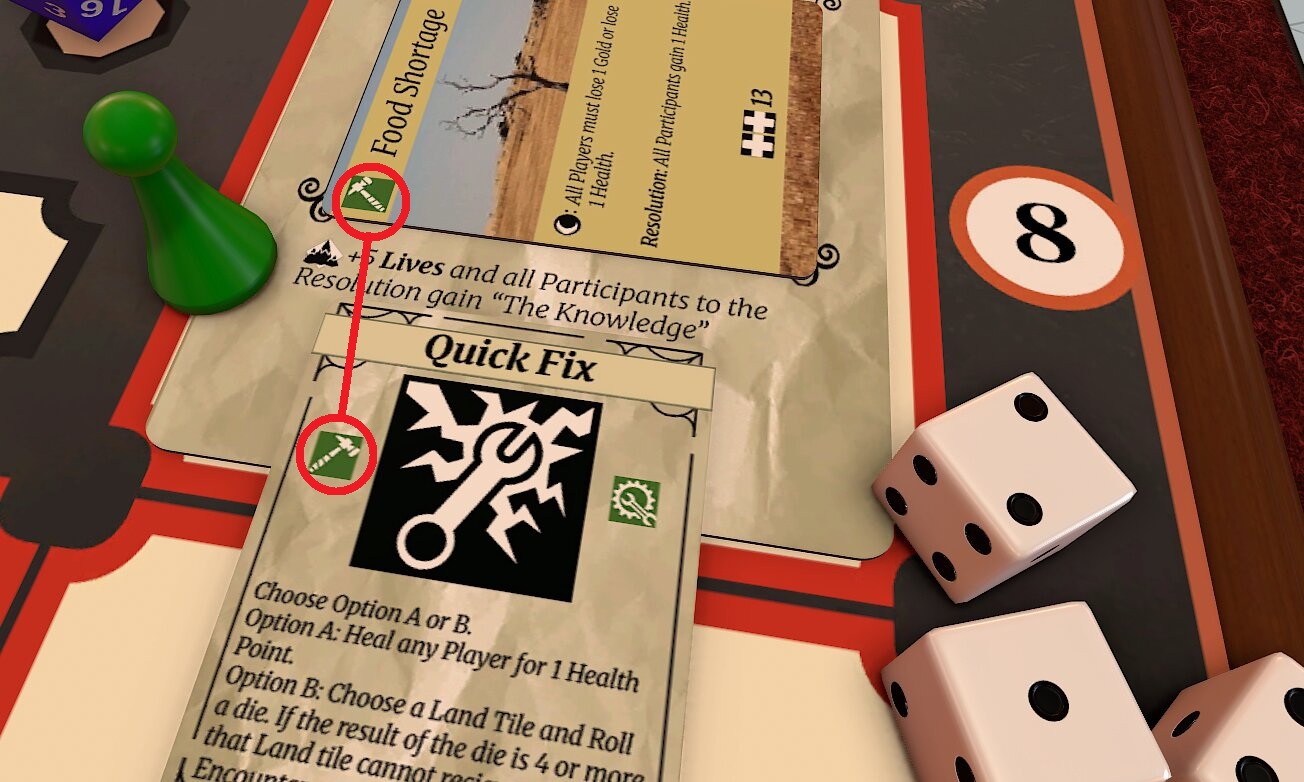
The type system also creates social dynamics on top of the mechanical depth. A player heavily invested in Control cards can see what others are planning. A player with Soft PvP cards can interfere at key moments. The type you specialize in tells other players something about your intentions, which feeds back into the paranoia pillar.
The Land Deck
Replayability was too low. The encounter deck alone produced roughly the same set of challenges every session. The game also needed a difficulty curve that felt organic instead of arbitrary, and the mystery/exploration pillar wasn't being delivered mechanically. Jeremiah suggested I look at the tile-flipping mechanics from 7th Continent for inspiration.
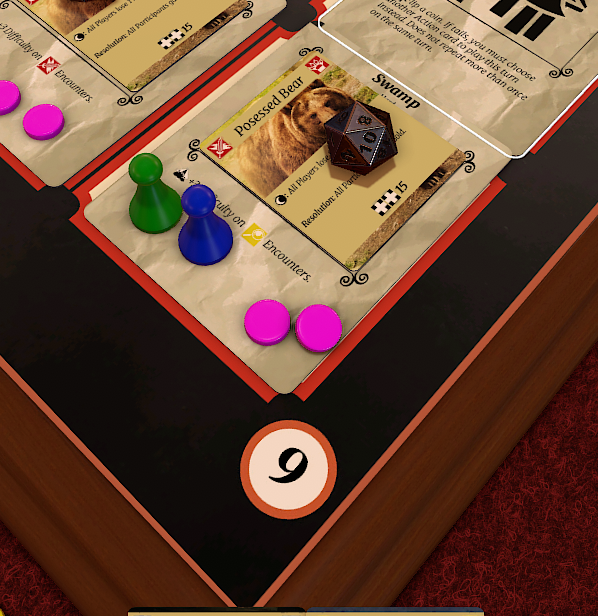
Instead of cranking difficulty up through stats, I added a second layer of randomness on top of the encounter deck. Land Cards represent locations on the island, and each one adds a modifier to whatever encounter is placed on it. Because any encounter can land on any location, the same encounter card plays differently depending on where it appears. 17 Land Cards × 12 Encounter Cards is 204 unique encounter combinations from a deck small enough to physically manage in play.
Lands fall into three tiers. Easy lands are introduced at game start, removed in the late game, and apply mild modifiers (some beneficial). Hard lands are introduced mid-game, never removed, and apply heavier modifiers (mostly threatening). Special lands are introduced mid-to-late game, never removed, and apply unique high-impact effects.
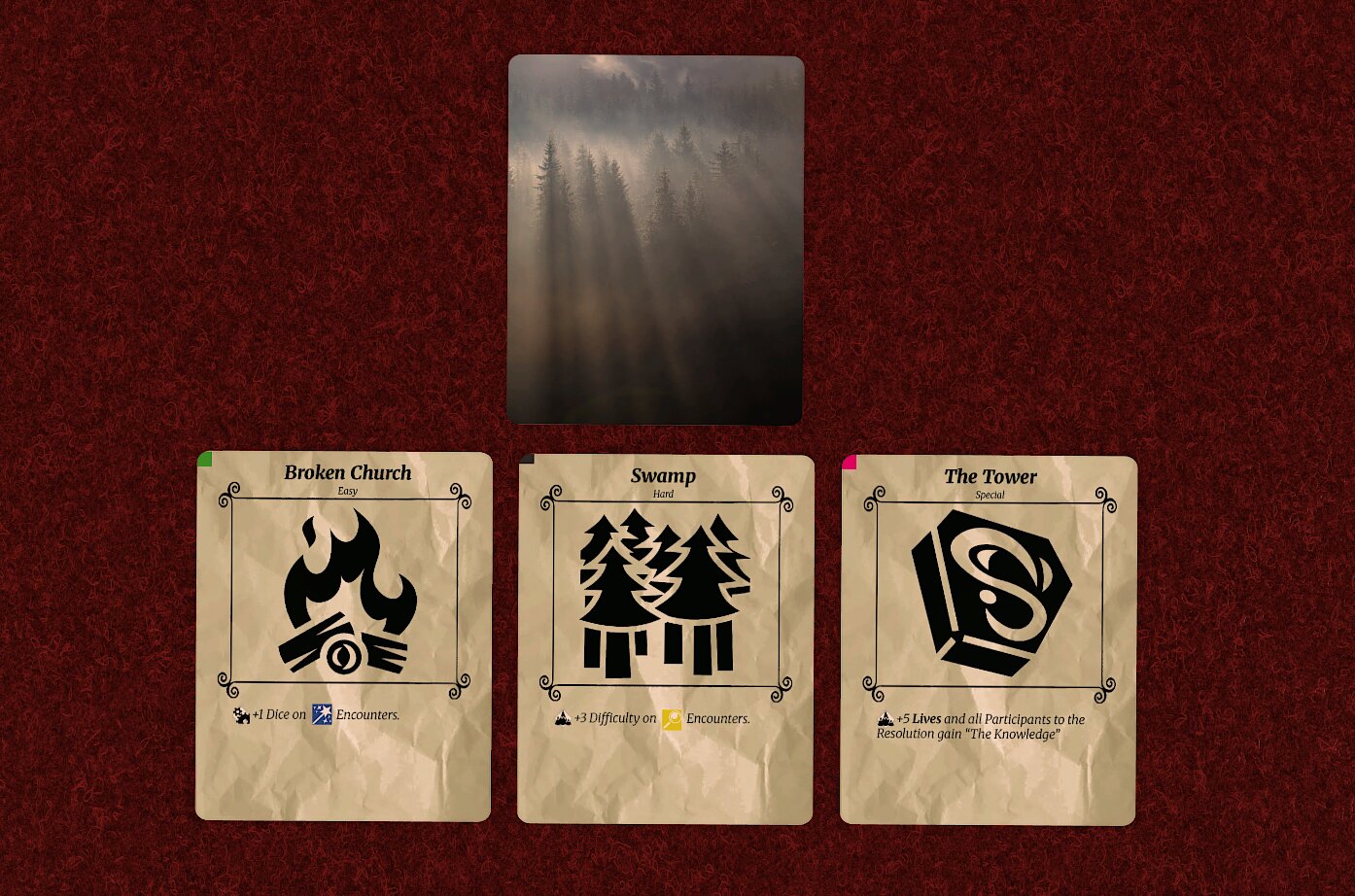
As the game progresses, easy Lands cycle out and hard Lands cycle in. The island is literally becoming more dangerous as the fog rolls over it. The mechanic and the theme reinforce each other without asking the player to track anything extra. This was a direct application of Jeremiah's teaching on resonance.
Deception & Cooperation
Pure co-op games often collapse into one player directing everyone else, the quarterbacking problem. Pure competitive games don't have the tension of uncertain alliances. I wanted a game where cooperation is genuinely necessary but always carries risk. You can't win alone, but the person helping you might be setting up a betrayal.
Endgame Encounters are special cards that appear in the encounter deck and trigger the game's final act when drawn. Each Endgame Encounter has a different victory condition and a different outcome for who benefits:
- Some let all players win, so full cooperation pays off.
- Some only let the resolver win, opening the door for betrayal at the last moment.
- Some create partial victories where only players who contributed to the resolution benefit.
Because the Endgame Encounter is visible on the table, players can read the situation. Is this one worth cooperating on, or is someone about to steal the win? The Control card type plugs straight into this loop: a player invested in Control cards gains intelligence about other players' intentions, at the cost of raw combat effectiveness.
The Ghost Player
When a player's health reaches 0, they don't leave the game. They become a Ghost Player. Ghosts get 1 die per Day that they can use to increase or decrease any dice roll made by other players. Dead players stay socially active. They can kingmake, sabotage, or support from beyond the grave, and the table's social dynamics keep going even after someone dies.
The betrayal possibility actually strengthens cooperation. Every moment of genuine teamwork feels heightened because it didn't have to happen. The other player chose to help when they could have chosen not to. That's the Sense of Paranoia feeding the Joy of Connection, exactly the way I planned.
Legacy & the Secret Manual
Single-session games have a replayability ceiling. Once players have seen all the encounters and learned the optimal strategies, engagement drops. I wanted a system that rewarded repeat play with new layers of depth while keeping the game accessible to newcomers. Ideally, newcomers would actually become a resource for returning players, instead of a burden.
After completing more than one match, returning players unlock a Secret Manual containing additional rules hidden from first-time players. The manual gives veterans extra objectives that create new reasons to cooperate or conflict with other players, including objectives that specifically require involving players who have played less. Knowledge Points accumulate across sessions and grant extra powers usable for cooperation or sabotage. Returning players are mechanically stronger, but their extra objectives also add complexity to their decisions. Playing enough games unlocks a secret Endgame Encounter that resolves the island's mystery, giving players a long-term narrative goal across multiple sessions.
Jeremiah compared the Secret Manual to randomized content systems from roguelikes like Hades, Spelunky, and Balatro: systems that reuse existing features and add variance through randomness to make each run feel unique. He recommended leaning into that as the game's main replayability driver.
The Graphic Overhaul
Information density was killing the experience. Playtesters kept reporting that there was too much to track at any given time. Cards had too much text, rules only existed in the rulebook (not on the table), and players couldn't quickly identify card types and synergies during play. The game was mechanically sound, but the interface was failing the player. In Week 6 I rebuilt every card and every board.
Cards: Before and After
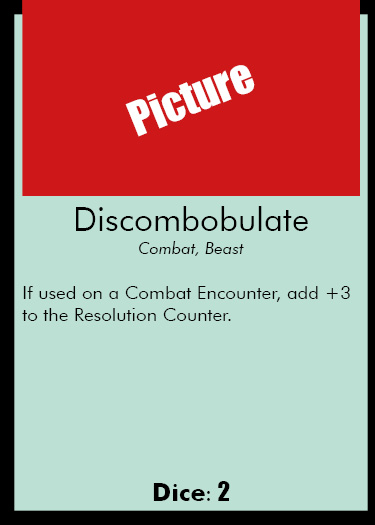
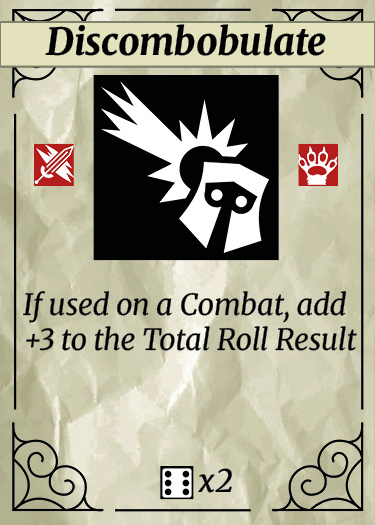
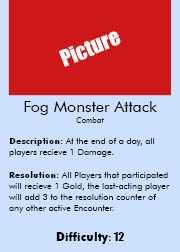
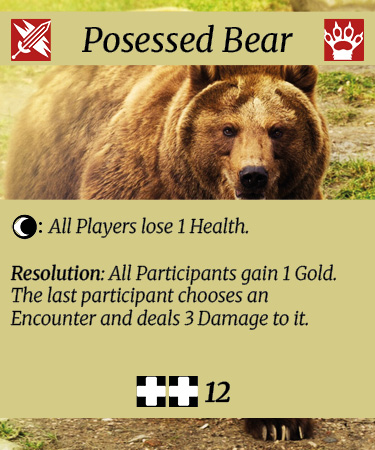
I replaced text labels with icons for Type and Subtype so players could spot matching bonuses at a glance instead of reading. Dice text became dice icons. Text size went up and the visual hierarchy became explicit. Card names are prominent, effects are secondary, flavor text is tertiary. Encounter cards now use borderless artwork as background. The border comes from the Land card, since Lands are the container for encounters.
Boards
I added three boards. The Player Board shows deck, discard, health, and gold areas with the rules printed directly on it, which removes the "imaginary areas of play" that previously had to be explained verbally. The Shop Board displays available items and action cards for purchase with pricing visible. The Map Board shows land card placement zones with numbered squares. Building it forced me to simplify several rules further, since the first version was "daunting to look at."
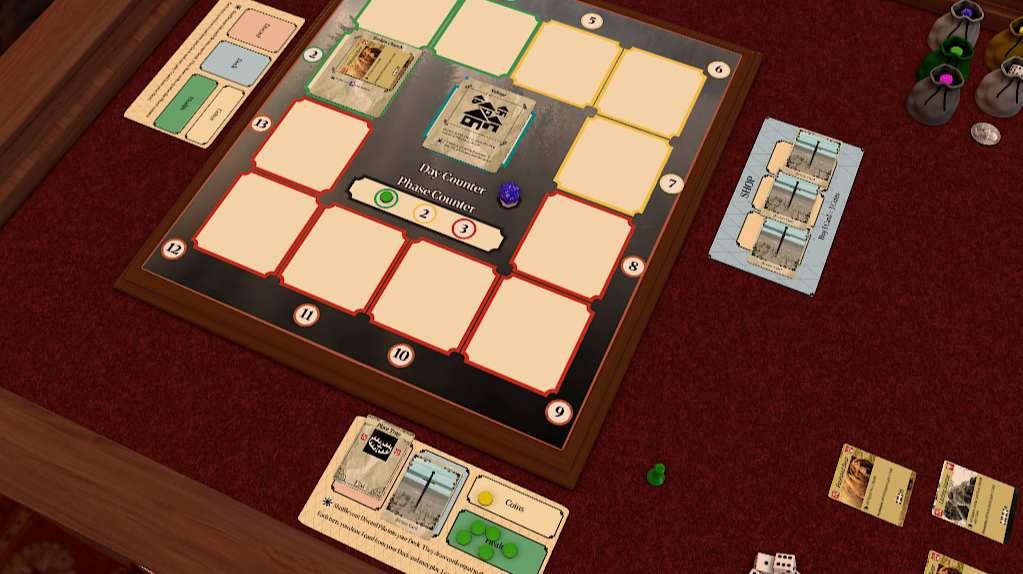
Jeremiah specifically recommended showing the old-vs-new card comparison in the portfolio "to show the iterative leap from first playable to finished version."
Research & References
Each reference game contributed a specific mechanic or design principle that I adapted, not just looked at:
- Werewolf. Hidden-role deception, reshaped into competing Endgame Encounters. Deception in Beyond the Mist comes out of goals rather than assigned roles, so players choose to betray rather than being forced into it.
- Binding of Isaac (card game). The coin/encounter economy. Players resolve encounters for rewards, spend resources in a shop, and the "is everyone helping or just serving their own gain?" tension maps over directly.
- Slay the Spire. Elegant deckbuilding. Every card added is a real decision, deck identity reflects playstyle, no filler cards.
- 7th Continent. Hidden tile exploration. Land cards stay face-down until placed, which gives me a fog-of-war resonance Jeremiah suggested in Week 1.
- Tainted Grail. How location modifies encounters. I adapted this into the Land Deck.
- Hades, Spelunky, Balatro. Randomized content systems. I applied this to the Secret Manual.
Prototyping & Iteration
The project moved through three prototype stages and seven iterations.
Weeks 1–4: Paper Prototype
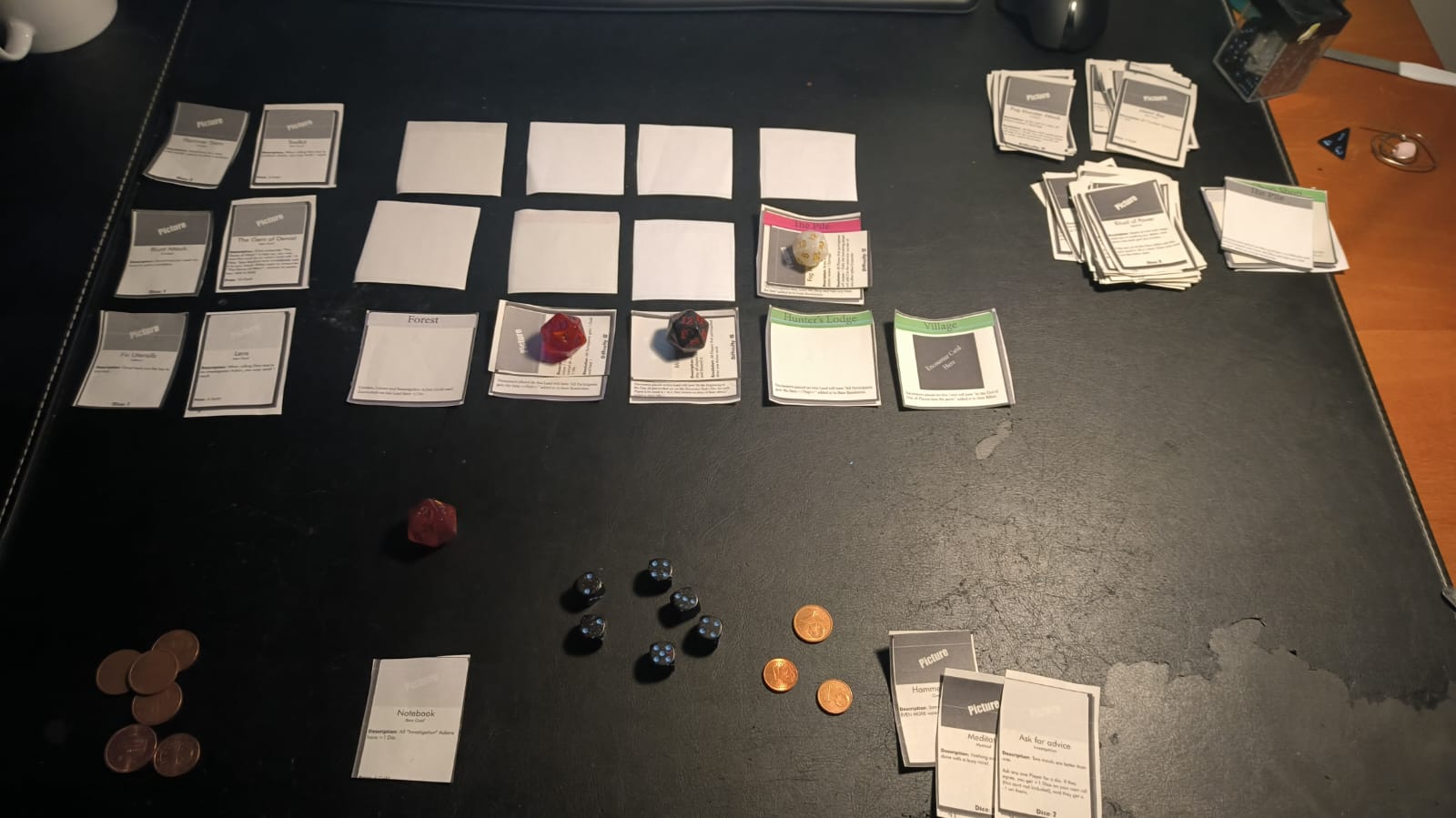
Printed cards with placeholder art and modular values, color-coded by type. The first solo playtest exposed the exploration agency problem.
Weeks 4–5: Figma Prototype
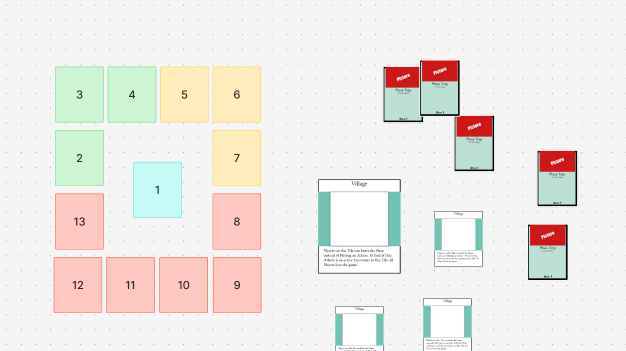
I built Player, Shop, and Land Boards to test how information was being conveyed, treating board layouts as rule-delivery systems.
Weeks 5–8: Tabletop Simulator
A full interactable prototype with all components and a per-player Rules PDF. Six blind playtests with other designers.
Key Evolution Moments
- Week 1. Initial concept: a survival deckbuilder on a mysterious island, 1-3 players, 100-day timer. Jeremiah compared it to 7th Continent and Forbidden Island and suggested hidden tile mechanics for the fog theme.
- Week 2. Full ruleset written. Card illustrations were praised. The 100-day timer was flagged as potentially too long.
- Week 3. Built the tile numbering system from 1 to 12, with Easy/Hard/Special classification.
- Week 4. MVP and first solo playtest. My note from that test: "I nailed the feeling of progression, but I don't like the little agency I've given the players." That diagnosis drove the type/subtype matching system.
- Week 5. Ported the game to Tabletop Simulator and introduced the Secret Manual legacy concept.
- Weeks 6–8. Six blind playtests with other designers, a complete card redesign using symbols, all boards added, and balance tuning using D6 multiples-of-3 math. By the final iteration, feedback narrowed to numbers-only tweaks, which suggested the core design was sound.
Playtest Findings
The solo playtest in Week 4 found that the core loop felt satisfying and progression was well-paced, but mystery was "completely absent" and exploration felt like picking the encounter that matched your card type. That diagnosis drove the type/subtype matching system and the land deck modifier.
Playtest #1 was a blind group test. The core concept was understood and mechanics were intuitive once explained, but information overload was the dominant complaint. The fix was boards with rules printed on them, more symbols, less card text, and simplified rules. Playtest #2: previous problems were partially solved, but information density and setup complexity still needed work. That led into the full graphic overhaul. Playtests #3 and #4 focused on economy tuning and encounter pacing. Feedback shifted from "I don't understand this" to "this feels too easy/hard," which is a sign that the core design was communicating clearly. Playtests #5 and #6 were full end-to-end sessions with the Quick Start Guide, and feedback by that point was specifically about balance. Jeremiah confirmed that meant the game was close to finished.
The progression of feedback tells the story. Week 4: "I don't understand this." Week 6: "I understand, but it's too much information." Week 7: "The information is clear, but the numbers are off." Week 8: "Just tune the numbers." Each iteration solved the top-priority problem and surfaced the next layer.
Reflection
What Worked
- The Land Deck system was the game's strongest mechanic. 204 unique encounters out of a small, manageable deck, with a progressive difficulty curve through land classification that didn't rely on arbitrary number scaling.
- Rapid prototyping (paper to Figma to TTS) let me validate ideas at each fidelity level without over-committing. The paper prototype caught the exploration agency problem before I'd built any digital version.
- The graphic overhaul was the single biggest quality-of-life jump. The game's complexity didn't change, the interface just caught up to the design.
What I'd Change With More Time
- The mystery pillar was the weakest. I flagged this myself in the solo playtest and partially addressed it through the Land deck and legacy mechanics, but the in-session mystery (hidden information, deduction, gradual revelation) never reached the depth I had in mind.
- Balance needed more playtesting. In my own words from the final submission, the game was "either too easy or too hard, not because of the randomness but simply because of the numbers." D6 multiples-of-3 math gave me a framework, but final tuning needed more sessions than 8 weeks allowed.
- Player count scaling stayed unresolved. Locking the count to a fixed number would have been a scope cut worth making earlier.
What I Learned
- Players are never wrong about their feelings, but they're almost never right about solutions. That's Jeremiah's most impactful teaching, and I've been using it ever since.
- Strategic complexity is better than logistical complexity. Complexity that reveals itself through mastery has no cognitive cost for beginners, while complexity you have to track constantly has a cost for everyone.
- Resonance is free depth. When mechanics echo the theme, the game teaches itself.